










































Revisiting the Role of Civil Society in Responses to Infectious Disease Outbreaks: A Proposed Framework and Lessons from a COVID-19 Vaccine Equity Coalition in Uganda
"...offers examples of the unique roles civil society can play in community mobilisation and empowerment, service delivery and advocacy to advance COVID-19 vaccine equity which are also applicable to other outbreak responses."
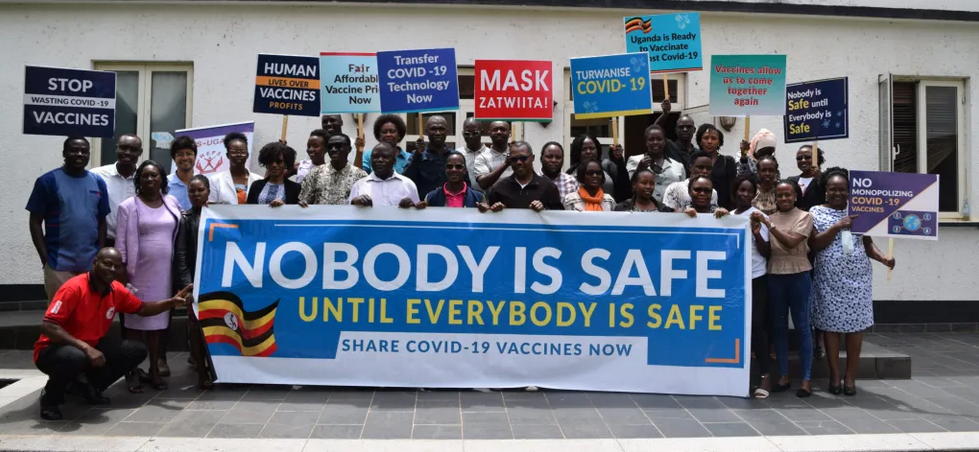
Civil society organisations (CSOs) - a diverse set of non-governmental, advocacy, and community-based groups - have historically played a role in advancing health equity. However, CSOS are often overlooked by traditional public health institutions during responses to infectious disease outbreaks. Finding a gap in civil society involvement in the COVID-19 response in Uganda, in September 2021, this group of authors formed the Vaccine Advocacy Accelerator-Uganda (VAX-Uganda), which is a coalition of CSOs, health workers, and academics working to increase access to and uptake of COVID-19 vaccination throughout Uganda, where, at the time, less than 1% of the population had completed a primary vaccination series. In this commentary, they share experiences from the first 21 months of VAX-Uganda and present a framework and some pragmatic lessons on engaging civil society to advance vaccine equity.
VAX-Uganda was conceptualised by the Coalition for Health Promotion and Social Development (HEPS-Uganda), a Ugandan CSO advocating for various health and human rights causes, and the Global Health Collaborative, an academic partnership between Mbarara University of Science and Technology (in Uganda) and Massachusetts General Hospital (in the United States, or US). HEPS-Uganda, with decades of experience organising around access to essential medicines, agreed to mobilise other Ugandan CSOs for form VAX-Uganda. The Global Health Collaborative, which had supported COVID-19 treatment and vaccination efforts in western Uganda since the start of the pandemic, would serve as a scientific resource for the coalition.
VAX-Uganda's initial mapping out of CSOs across Uganda revealed widespread interest in supporting vaccine equity efforts yet a number of gaps limiting their involvement, which the coalition worked to address. In addition to securing grants from a US-based philanthropic organisation, VAX-Uganda organised a 4-day workshop in April 2022 reviewing basic vaccine science for 40 CSOs. The workshop featured multiple invited speakers from the Ministry of Health to spark dialogue and future opportunities for COVID-19-focused collaboration between CSOs and the government.
Following the April 2022 workshop, the number of CSOs in the VAX-Uganda coalition increased to 60, representing organisations with expertise in health activism (particularly related to HIV), health communications, intellectual property rights, and other areas - all committed to responding to COVID-19 in Uganda. Members of the coalition and other partner CSOs have supported equitable access to vaccinations in three key, replicable ways:
- Community mobilisation and empowerment: For example, with VAX-Uganda's support, HEPS-Uganda hosted 24 town hall discussions across the country in 2022 to address questions and concerns about COVID-19 vaccination, an intervention for improving local trust in vaccination. These community events involved presentations on the science and safety behind COVID-19 vaccines, as well as on local and global challenges influencing vaccine access and potential solutions to these. Many participants highlighted their willingness to follow HEPS-Uganda's guidance given the organisation's decades of providing accurate information about HIV in the same locations. In an effort to reach additional audiences with the same messages, staff from HEPS-Uganda also participated in multiple television talk shows and Twitter spaces encouraging people to get vaccinated. CSOs have also supported the COVID-19 community mobilisation activities of other public health institutions.
- Service delivery: After receiving basic training from the Ministry of Health, the Uganda Red Cross Society deployed volunteers to support understaffed COVID-19 vaccination teams in five districts in western Uganda. When local demand for vaccination surged to even higher levels, the Uganda Red Cross Society responded by having existing volunteers train new volunteers, increasing the number of people who were able to assist at vaccination sites.
- Advocacy: Ugandan CSOs in the VAX-Uganda coalition, in addition to CSOs around the world and US-based partners in the coalition, have used open letters, public demonstrations, and other strategies to raise public awareness of "vaccine nationalism" and to urge wealthy nations, pharmaceutical companies, and others to make COVID-19 vaccines more available in low-income settings. Advocacy can also take the form of requests to duty-bearers. During an April 2022 meeting organised by VAX-Uganda between 40 Ugandan CSOs and the Ministry of Health's Director of Public Health, civil society representatives identified widespread confusion in their respective communities around receiving a different COVID-19 vaccine brand for one's second versus first vaccination dose. CSO representatives asked the Director to publish clear public guidance on heterologous vaccination and to instruct radio stations to stop playing outdated messages recommending against the practice; he immediately carried out both requests.
Lessons learnt from VAX-Uganda that may help to create more genuine outbreak-focused partnerships include:
- Ensure civil society representation in decision-making platforms: VAX-Uganda demonstrates how giving civil society a "seat at the table" allows initiatives to benefit from CSOs’ community-level insights. Importantly, other stakeholders should be mindful of avoiding meetings that performatively have CSOs as attendees but fail to produce concrete commitments or empower CSOs to take on new responsibilities. VAX-Uganda recommends including CSOs in decision-making platforms at baseline, and not just during active outbreaks of infectious disease.
- Equip civil society with resources needed to support outbreak responses: VAX-Uganda's experience highlights multiple forms of resources that governments, academia, and others can provide for CSOs: funding to organise public health activities, connections to advocacy platforms, such as media interviews and testimony invitations, and training on the science underlying vaccines and other life-saving interventions.
- Set specific and measurable goals with civil society partners: Having concrete targets for each CSO-centric objective - for example, the number of CSO-led advocacy events to be organised in a year - can keep meaningful coalition activities on track and reaffirm a shift away from meetings that are more performative than active engagement. By jointly setting specific and measurable goals with CSO colleagues, public health authorities can reduce ambiguity around these collaborations and better evaluate which aspects of the partnership can be improved during future infectious disease outbreaks and other health challenges.
In conclusion: "The experiences of coalitions that arose out of the COVID-19 outbreak, such as VAX-Uganda, demonstrate the important roles CSOs can play in advancing health for all during a public health crisis. As we move forward and face future infectious disease threats, CSOs can be an essential component of a successful response especially when governments, donors and others assign effort and resources to include them, ideally before emergencies arise."
- Log in to post comments